Bramble: The Mountain King

I already know that I’m going to be the unpopular opinion and I don’t expect to get any fans from this review, but I can’t help but feel like a lot of the aspects of this game that bothered me are being overlooked in lieu of the graphics. Bramble: The Mountain King is a linear adventure, horror-lite game taking inspiration from Nordic folklore developed by Dimfrost Studio.

Story: The atmosphere of the game is well developed, and progressively becomes more ominous as the story progresses. Even though this is a horror-lite style of game, it does rely heavily on gory visuals to unsettle the audience. It was nice that the story was voice narrated. This helped to reinforce the idea of a story being told, or having a story read to you.

Pacing: The game is relatively steady depending on how easily the player overcomes different types of obstacles or boss fights. The somewhat janky controls for the character’s movement often leads to frustrating delays by not responding well to player input and command.

Visual: It’s obvious that Dimfrost poured a lot of their attention into the visuals for this game. It’s beautiful. I don’t dispute that at all. The thing is, I can’t help but wonder how many people can play this game on high or ultra graphics like it is supposedly intended to be seen. The average gamer doesn’t have high end graphics cards and so they’re paying for this gorgeous game they can’t fully enjoy because it won’t run without lagging all over the place.
The animation style is well selected. It fits the game, the type of story, and the settings where the main character would be wandering from one area to the next. Soft, fantasy-feel, and creepy. And don’t forget all the inclusion of gore details from wading through intestines and other internal organ refuse, to repeatedly shanking a demon woman in the heart (100 times in a row for an achievement) and having blood spray all over a little boy’s face with every stab.

Audio: The ambient music seems to fit the setting well enough, and I have no complaints in that respect. In contrast, I absolutely hated the screeching and squalling of the little gnome children. It hurt my ears and grated my nerves to the point where I had to turn the sound off when I interacted with any of them that were crying. Like forks scraping across a ceramic plate, oof.
The lack of voice acting for the characters isn’t exactly a negative. It played into the way the narrator was someone was supposedly reading you a twisted bedtime fairytale story. A stylistic choice.

Gameplay: As I mentioned before, the ability to control the movements of the character was more than a little loosey-goosey at times and downright infuriating in some instances. I feel like if the controls had been tightened up a little to be more responsive on the interface, perhaps that would have been a little less irritated when the character repeatedly ran in a direction I wasn’t aiming.
Another thing I noticed is the reuse of mechanics in the game. It’s not a long game. The same use of hide from the light, hide from the sound, hide from the troll, hide from whatever is overused. There are lots of things you can do in an adventure game, add in more variety! That same thing is employed in at least three different areas and it’s only a four-hour long game. The lack of variety is really disappointing to me.
I will say that the “boss fights” are very well done. Those are unique (mostly) and I thought they are clever and in theme with whatever is going on at the time in game. Kudos there, awesome job. Wish the innovation of those battles was brought to the rest of the passive gameplay.

Accessibility: I will say this, Dimfrost did step up and put in an option for colorblind people. And not just one option, but several different types of colorblindness. Very cool of them to do that. They also had subtitles available for those who are hard of hearing or just like subtitles, and an assortment of languages to choose from for which the game could be played.

Conclusion: I can’t shake the feeling that the developers leaned heavily into the graphics and neglected the gameplay and controls part of this game a bit. Perhaps a few more hours of polishing would have really made a difference. The price is about $30 dollars for a four-hour game. That’s a bit rich for my blood. I won’t be recommending this game unless you really don’t care about the price, and you want to stare at something pretty. The story is alright. The boss fights are great. There were very janky controls that often frustrated me. The gnome children cries are absolute torture for your ears…
Overall, the game is very attractive, but I ran into a lot of hangups that really rubbed me the wrong way. Don’t get this game unless it’s on deep discount.

Bonus:
Does the game have achievements? Yes.
Are they tedious/impossible? There is one that is tedious but depends on how much time you want to spend trying to get a perfect run.
Are they fun/worth your time? All except the perfect run are relatively reasonable. As for the last one: In my opinion, life’s too short.
Are they easy, playthrough only achievements? No, perhaps a handful are story related. Many are collections you have to look for, and a few more are random things some players might get without trying if they enjoy playing around.
Other: There is chapter selection if you want to hop back though the chapters to get to an achievement that you may have missed without having to replay the whole game. That’s always nice.

Like the review? Come catch me live on Twitch, follow my Steam Curator page, or check out some clips.

Dredge

Dredge is a fishing, exploration, and collection game that has a few puzzles and a lot of mysteries to unravel. This is the first game developed by Black Salt Games, and let me say, they knocked it out of the park. I loved reading all the individual aberrant descriptions for all the mutated fish and looking at the images. (Got me attacked by monster more than once.) Very creepy.

Story: What can I say about this game other than the story and the mood of the entire experience ushers forth a lingering foreboding. With every quest you complete, the world of Dredge seems to get a little darker and more unsettling. The Black Salt Team did an amazing job of developing the atmosphere and designing quests that support and perpetuate that feeling.

The dialogue of the characters is believable, though a little limited. Ultimately, you’ll get all the information you will need to continue the story and complete quests. Occasionally, you may find a little extra story here and there if you catch up for a chat with the locals.

Pacing: The pacing for this game is relatively steady, aside from perhaps trying to catch mutant fish where you have little to no control over when they decide to jump into your nets. These times you may get lucky in ten minutes, or you could be at it for a while and cursing your choice to become a fisherman. I was the latter.

There are boat upgrades that are available any time throughout the game. You can progress though those as quickly as you wish, if you can fulfill the requirements. There is a bit of fishing grinding, but toward end game, they give you a few more tools to help you get the last missing fish/fishy mutants so as that you’re not suffering for hours on end—unless that’s your jam. You do you. No judgment.

Visual: I really enjoyed the art style of this game. It was aesthetically minimalistic, but with enough details on the fish art that really showed the passion of the developers for their game. I thought the developers had a great grasp of how they wanted their game to feel and appear. Their animation and special effects all aligned with the feel of the game. Simplistic, rustic, and a little bit of unnatural danger lurking just beneath the surface. An example being the speed boost for the boat, a little bit of the boost is fine, but the longer you use it the more danger you are in, and the animation shows this by darkening the screen with a reddish hue gradually. Most appropriate.

Audio: You are playing an ocean fishing game, you expect a little accordion music, yes? Well, check that box. The ambient noises of the ocean’s waves, the unsettling groans from the deep, the screams of the birds overhead, all of these are working in combination to bring this game to life. And they do it well. The sounds only support in creating the unsettling atmosphere and creating a more “tangible” environment.

There’s not any voice acting other than a few “hmm’s and haw’s” so that area is rather limited. No voiced dialogue.

Gameplay: I didn’t run into any bugs while playing Dredge—a welcome surprise. The game itself is easy to pick up. The controls are limited to directionals, the interact button, and what special ability you want to have equipped and activate. I believe there is some DLC that you can get to have access to some ominous shed on this special island, but I don’t know if it’s worth the cost for whatever limited content that area may provide. I didn’t buy it. It’s not required to complete the game.

Accessibility: In the options sections when setting up the game, there is a surprising amount of accessibility choices to help make the game playable for everyone. I do believe there are settings for colorblind capabilities. Ya love to see it! The game is played in third person, with little to no screen shakes, though there is the occasional screen shade darkening or becoming another color. The game is controller compatible and may even play smoother with a controller. I played with keyboard and mouse and found the experience to be a positive one.

Conclusion: For a new game being $25 dollars isn’t unreasonable at all (especially when there are larger titles games charging three times that and delivering less of a satisfying experience). Dredge is doing all the things right for up-and-coming developers in the community. The game is unique with the graphics and music. The developers are taking pains to add such extensive accessibility options to keep the game as inclusive as possible is a huge win in my book. That’s what players should expect from all developers big and small going forward and Black Salt Games is riding that wave.

The game is a lot of fun. I’d recommend this to anyone who’s looking for a good chill game, who likes collections games, or who really likes fishing and eerie eldritch feels emanating from the depths of the ocean.

Bonus:
Game has achievements? Yes
Are they tedious/impossible? No
Worth your time? I would say yes if you’re looking for that 100% type of deal. A few of the achievements are story based, but most are discovery.
Storyline tip: There are two possible endings to this game.
Quests tip: There are four quests that you can fail if you’re not ready for them. They’re started by people dressed in hooded robes out on secluded islands. Don’t talk to them unless you can use a variety of methods to get an assortment of fish. If you’re unsure: Wait.

Like the review? Come catch me live on Twitch, follow my Steam Curator page, or check out some clips.

Mr. Saitou

Mr. Saitou is a brief, emotional journey though the life of a man named Mr. Saitou (who would have guessed) and also llamaworms. The title itself doesn’t give much away, but the game is very quirky and lighthearted while also making the player pause and contemplate. The game is sort of a rich story style mixed with puzzle. For the content and how much enjoyment I got out of the game, I believe it’s a fair price for the game, no complaints. Don’t get me wrong, the details and the amount of work that went into this game are very much there. The developer for this game is Laura Shigihara, and to my surprise they have another game Rakuen, which I did not know about, and I’m inclined to check out after playing this game. Mr. Saitou may inspire you to reevaluate what’s really important in in life, or just be a very entertaining journey and some time well spent.

Story: For most of the game, the atmosphere was rather lighthearted. A great example being if you talked to any of the plants, each one would say a unique thing and I found that rather fantastic. The narrative was a mixture of seriousness and humor. I felt like that since I hadn’t played Rakuen, I was missing out on a bit of the story, but I still enjoyed what was presented to me. I found the message of the game rather all-encompassing and uplifting, considering the rough social times the world seems to be stumbling though currently, it was nice to have a game that sort of lightly touched on “keep your chin up” attitude while not being condescending. More of a gentle pat on the back or a warm hug.  

The plot was clear and well written. Humorous and I enjoyed being able to examine all sorts of things in the environment that just added more to the flavor of the story rather than just decoration. My favorite being the “deadliest cakes” book. The dialogue between the characters was realistic and not awkward. I had fun reading it aloud on stream. The intensity from the annoying llamaworm in the office that cornered you is clearly felt and translated through the dialogue. Well done.

As for side quests, I wouldn’t say they existed. There were quests, but they did all follow the main story and nothing really took you far from what you were supposed to be focusing on. I think in such a short game, that’s rather essential so the player doesn’t get tangled up and lost in the weeds somewhere alongside the road and lose sight of what’s really going on.

Pacing: The pacing for this game was smooth. There wasn’t really a lot of back tracking, only a few detours for solving a puzzle here or there, but otherwise it was a nice, steady pace where the player could pause to investigate the environment as they pleased before moving on to the next area. Not too slow, and not rushed. The length of the game itself is a few hours give or take your personal speed though the game.

Visual: The style of art in this game is gorgeous pixel art. Usually I’m not that drawn to this style, but Mr. Saitou was very detailed, and I found myself just staring at the backgrounds and enjoying the amount of work that went into creating the areas where I was able to explore. The animations were relatively simplistic, but also without being too simplistic. I want to say something like modernized classic Mario, but I feel that would be doing a disservice. The art style was just beautiful and unique. I’d love to see more from this publisher in the future.

Audio: This game is solid text dialogue, not voiced. I wouldn’t count that as a negative. The music was pleasant and matched the ambiance of the different areas and the mood of the game. Plus, at the end of the game there’s a bit of an audio bonus. Not going to spoil it here, but it was a fantastic surprise. No, not a jumpscare.

Gameplay: The gameplay was nice and smooth. I didn’t run into any bugs. No complaints about quality-of-life changes. The game was easy to pick up and play. There is no grinding or crafting and no gear gating or combat. Nothing difficult to learn. There may have been Easter Eggs calling back to the Rakuen game, but I wouldn’t have recognized them, as I had not played the previous game.

Accessibility: The controls are not customizable. A bit of a disappointment, but the controls were also not that complex. It’s likely that most people will still be able to play this game. The game is played in third person view. For anyone who feels nauseous in close up first person, you’ll be safe from that. There may have been one or two screen shakes, but they were very brief. I don’t recall any screen flashing. I didn’t see any options for customizing the game. There wasn’t an “options” section on the start screen.

Conclusion: This is a great Indie (independent) game. I would recommend this to anyone who likes indie games or story rich games. It’s not going to take a long time to play. It’s cute. The game carries a positive message while also addressing some of the “darker” struggles a lot of us face today. I loved the llamaworms. It’s such a silly and wonderful idea. I can’t wait to see more from Laura Shigihara and I hope to play Rakuen very soon. 9/10

Bonus:
Does game have achievements? Yes.
Are they tedious/impossible? No. Very doable.
Are they fun/worth your time? Yeah. Most are story related.

Like the review? Come catch me live on Twitch, follow my Steam Curator page, or check out some clips.

Persona 3 Portable

Disclaimer: Before I start this review, I need to preface everything that is about to be said with a grain of salt. In the past, I played Persona 3 on Playstation 2 and that was my first experience with any Persona game. A very defining experience that—in my mind—is the golden standard of what is to be expected. I do understand that PS2 was not the original format of this game, but nostalgia doesn’t give a flying focaccia. My rating will undoubtedly be a little biased based upon my own personal expectations and experiences.

Where to start, I have so much to say about this game. Persona 3 Portable is a JRPG developed by Atlus. Considering the age of the game and that this is the “portable” version of this game, and I heavily underline portable here, the price for the game is pretty good given the story and the amount of content you’ll be getting: from 65 (main story) to 125+ hours for completionists. I do admit that the portable version surprised me with the option of playing a female protagonist. That was not a thing in the PS2 version. Unfortunately, after pouring over 60 hours into the game, I did not see any additional efforts toward diversity representation. The female/male protag option was a small step forward, but not much. I would say at the time of this review what they’re selling this game for (at full price), it’s worth your money.

Story: When it comes to the main story of the game, I may be an outlier when I say this, but I love that the game’s atmosphere is so very “edgelord.” Typically, that’s an insult, but you know what, it just hits that nostalgia sweet spot when I discovered the summoning style for the personas (the main mode of battle in game) was to place an evoker (a fake gun) to the head and “evoke” (pull the trigger) a strong enough emotional response to summon the desired persona. I completely acknowledge how incredibly violent this sounds and is in the game even if it is with fake guns, but it was Atlus daring to push the boundary—the edginess—like this that made me fall in love with Persona 3 when I played it the first time. Some might argue that this deliberate choice in visuals is an encouragement to gun violence or self-harm, but honestly, that argument has been around for years, and it’s been debunked. If the visuals make you uncomfortable, perhaps this is not the game for you.

Setting that all aside, the narrative plot is pretty good. The story keeps you engaged and motivated to find out what is really going on with the sudden appearances of these monsters and the manifestation of the Dark Hour and Tartarus. Most of the major dialogue is narrated, but not all. I would have preferred that the entire game was voiced, but what was voiced was well done. Most of the quests follow the story, but there are some side-quests that are time sensitive so if you’re interested in doing those, be careful not to lose track of in-game days.

Pacing: As for the pacing of the game, I found it a little sluggish. There is a lot that needs to be done most days if the player wants to be well prepared and cultivate social links (relationships between different people; essential to gameplay), and really brings the flow to a plodding march. Though you are getting between 65-125+ hours of gameplay, that’s a long game. A really long game. Most people don’t have that amount of free time to pour into a game anymore unless Atlus is solely focused on the younger end of the spectrum when it comes to the consumer base. That’s a big for our time and our attention and with the molasses-like pace, it’s easy to get dissuaded from returning to this game in lieu of something a bit faster paced. Grinding can be a thing whether it be for money to buy gear, for a quest, or to level yourself or your persona, grinding is a part of any JRPG. In the same vein, there is a little bit of crafting, but it’s more of a trade and fuse system to make rare weapons, unless you count the persona fusion system as a crafting system. That is a major part of the game, smushing demons together to make stronger demons is a core mechanic and required to progress. Pro Tip: I highly recommend not mushing any demons together until you unlock the compendium, which I think was after you defeat the first major boss.

Visual: We’ve gotten to the salty portion of this review. As I mentioned, I’m more so comparing my experience with Persona 3(PS2) and Persona 3 Portable(PC port) and I’m going to tell you, for this being a “to PC” port, as in: more space for graphics improvements, more space for details, visuals, everything—they opted to go with the “portable” version of Persona 3 which is vastly underwhelming visually in comparison to the PS2 version. Missing cutscenes that really added to the ambiance of the game, added depth and context to situations, helped get more of a visual representation for the characters, involved the player more in the game… No, they chose to not add any of that in and produce this underwhelming, restrictive, half-assed, stripped-down Persona game. So far, the only difference I’ve seen is the option for a female protagonist. They could have easily added that and added in the better visuals, more detailed character meshing, and so on. There is a severe lack in variation when it comes to “all-out attack” moments which was a very frequent occurrence in my gameplay experience, though the effort of making the rising dust cloud look like a skull was nice. Other than that, any other special effects are limited to persona spells and nothing there was anything super flashy. I can’t speak much of animation style other than in combat, it was a little chunkier than I was hoping for, and any other outside animation was simply cut from the game. Considering most of the game is still backgrounds, it’s not difficult for the details to shine though on those, but for anything even slightly animated, the lack of love and care is blatant.

Audio: I will give credit where credit is due, Atlus has a knack for putting great music into their games. The songs tend to be unique and fit the atmosphere of the game. As previously mentioned, the voice actors did a good job where they were allowed dialogue. Only wish there was more of it.

Gameplay: The gameplay didn’t seem to have many bugs, or at least not so many that their appearance was disruptive. There were a few quality-of-life mechanics that could have been implemented related to sorting the inventory and being able to access your current active quests anytime/where without going to the velvet room. There wasn’t much of a tutorial. The occasional spoken suggestion on how to use tactics on individual people, but as the game progresses you might want to be controlling your characters individually instead of using the AI and tactics depending on what difficulty you’re playing on (beginner/easy/normal/hard/maniac). I was not a fan of how they removed the individual’s ability to walk/run their character around the environments which aided in game immersion. Instead, they switched to a circle cursor and drop-down list selection process to interact with the world around you. I found this jarring and disruptive to the gaming experience compared to the PS2 version. I’m not a big fan of the radial dial for battle, it’s easy to skip over or misclick choices. The entire game is in third person so it’s very unlikely that motion sickness will be an issue. The player can choose to play with a controller, or a keyboard and key customization is available. No cross compatibility since this is a single player game.

Conclusion: Even though Persona 3 Portable really shat over my expectation for a PC Persona 3 game, if you focus on the story and the mechanics, you still can have a pretty good experience with this game. What I liked most about the game was that it felt like Atlus was pushing boundaries, leaving that edgy feel, but also the game focuses on how much relationships with people matter. The game encourages you to leave your comfort zone to become more courageous, intelligent, and charming while making friends with all sorts of people. The game emphasizes the importance of human connection, try not to hyperfocus on the shock-and-horror style of combat, that’s only skin deep. I would recommend this game to people who are a fan of Atlus games, or JRPGs, or if you’re looking for a game that you can really sink your teeth into and you have plenty of time to dedicate to it. There are plenty of improvements that could have been made, but all I can do I hope for another, better remake in years to come. 7.75/10

Bonus Notes:
Does the game have achievements? Yes.
Are they tedious/impossible? Tedious, maybe. Impossible? No.
Are they easy/playthrough only achievements? Some are playthrough related and some you need to go out of your way to achieve. Best be aware of what you need to do before you miss out on something, if you’re going for that perfect game.

Like the review? Come catch me live on Twitch, follow my Steam Curator page, or check out some clips.
Blacktail

The atmosphere of this game is one of its own. Somewhere between fever dream and fantasyland, the vibrant colors and almost cartoony style the game seems to draw on for its inspiration sets an appropriate mood for more that just your typical walk in the woods.

When Baba met her Yaga: A story of two sisters. Blacktail is a Scandinavian folklore adventure featuring a young girl named Yaga who is searching for her missing sister Zora, one of many recent child disappearances from their village. Yaga’s adventure leads her to uncomfortable truths and a journey of personal growth as she battles an assortment of monsters, collects items for crafting, and forges her own path through decisions made.

Gameplay: The gameplay was simplistic in nature as you are only given two spells, a broom, and three types of arrows to work with, along with one additional “overcharge” skill. How you choose to use these in combination is up to the player, but the combinations are relatively limited and can get repetitive when most enemies are dealt with in the exact same manner.

 I played this on keyboard and it seemed to work without much tinkering in the keybinds department, that’s always nice. There seemed to be a controller option, that might be easier with the way the arrow/potion switching system is set up.

Positives: This game draws on the nostalgic memories a player might have about reading fairytales and other folklore stories in their younger years as the game draws on this and references other recognizable fairytales. (No spoilers here, you’ll know them when you see them. I promise.) This sort of creates a warm, fuzzy association with the game. One could call this cheap or a clever use of nostalgia to immerse the player in the world of fantasy.

There were several questlines and distinctive characters Yaga met along the way. I like how the decisions that I chose for her path, did seem to effect my interactions with a few of them as the story progressed, though, I was hoping for a bit more in the visuals department. I did very much enjoy the style of the drawn “memory” type cutscene. I thought that was a good choice in style for it was child-like, much like the perspective of the story and unique looking.

Negatives: When starting out in this game, the player gets a bit of a tutorial as to what to expect and how to fight and what to do with pages you collect. Though, it was less clear about how those pages were properly unlocked with items you collect. What happens to the extra stuff you collect and can’t carry? What’s that weird eyeball flower? How do we learn what skills mean? The frogs actually DO things for you? What’s the mouth thing next to the cat at the house? You’re supposed to do what to find a minigame? None of these things are explained to you. Or, like the eye-flowers, are explained to you much later than you start seeing them and would require a lot of back-tracking to address the knowledge you’ve gained. This is super inefficient. I’m coming to this game to have some fun with magic and some folklore, I don’t want to be spending my time trying to figure out what things mean and do when a short “how to” more appropriately placed in the storyline would have made the game experience run much smoother. Quests were easy to miss if you weren’t actively looking for them and I spent a lot of time doubling back once I figured how much I had missed.

I also was rather bothered how they decided to end one of the major reoccurring themed questlines with Yaga being gaslit. After everything that we see in this game, how full of fantasy and silliness, and then to pull that card as a finisher? Not going to lie, I was super dissatisfied with that choice. I was mad. I don’t know why the writers thought these choices were the best way to finish a questline and the entire plot and pacing of a game, but their calculation was so very off base it was grating.

I came across a lot of glitches. They weren’t game hindering at first merely annoying, such as textures not loading or invisible enemies that couldn’t be damaged. But the further I progressed in the game the glitches became more frequent, and I had to restart a few times to correct the problem. Of course all of these break immersion so that was a bit of a distraction to an annoyance depending on the amount of time and effort it took to correct the problem. But, believe it or not, this was not my biggest let down of this game.

My disappointment was centered in how they decided to offer up the plot’s “BIG REVEAL” which was done in passive conversation while the player is doing other tasks and not totally focused on the speaker, as opposed to the dramatic emphasis they put on the (supposed) actual ending “reveal” of the game. In other words, the focus was on the wrong thing at the wrong time plot wise and it really made the ending of the game less impactful than it could have been.

Conclusion: Despite all the negatives, I did enjoy the game—even if a few character monologues ran a bit too long (one literally felt like ten minutes). I liked being able to explore the fantasy world and cast a bit of magic while shooting arrows and the surprise callbacks to other fairytales was a nice way to break things up a bit. The boss battles were not too difficult once you figured out the mechanics, and the game tended to keep you engaged most of the time.

I guess what I’m trying to say is, I recommend this game if you enjoy fairytales and are specifically looking for a new experience of the Baba Yaga tale. If you choose to undertake this venture, be warned to take it with a few grains of salt and be sure to explore EVERYTHING or you may miss out on some content and secrets. (Oh, and a sale discount wouldn’t hurt.)

Like the review? Come catch me live on Twitch, follow my Steam Curator page, or check out some clips.
Stardew Valley


You start out as a city slicker that has inherited an old, run down farm and you’ve been asked to renovate, repair, and revitalize the place. The player will quickly discover this game is not only about growing vegetables and fruit, there’s also the opportunity to create meaningful relationships with the local community. And if that’s not enough, there’s always crafting, exploring, battling, mining, ranching, fishing, gathering, and a variety of collections and achievements to name a few.

The controls of this game are pretty simple and easy to pick up. The hotbar keys are helpful to make switching between tools a breeze.

Stardew can be played solo or with friends. In co-op mode, you can have up to four players working on the same farm at the same time. Players can drop in and out of the game [as long as it’s hosted] whenever they please. The only downside to multiplayer that I’ve found is that the days are much shorter seeing as time doesn’t stop when you’re having conversations with the locals, or viewing a cut scene, because not everyone is doing the same thing as you and so that would be unfair to them to stop the entire game every time someone wanted to have a conversation. So, I suppose that’s a plus to playing solo, but conversely all the players work together and potentially share the profits [this is a settings option] and so more working hands pays off quite literally. I also found it refreshing that you can choose different “styles” of farm. I haven’t explored much with this yet, but it was a nice change and challenge from the standard starting farm. I look forward to trying more.

In Stardew Valley, all your farming dreams can come true. Perhaps that is a bit of an exaggeration. None the less, Stardew emerges into the Harvest Moon, Story of Seasons, and Rune Factory scene offering much needed freedom for character customization and LGBTQ+ options. Something all the predecessor games severely lacked. Being a fan of these games for many years, I always felt out of place when given the “romance” options considering they were depending on if you chose to play a male or female character. This always brought a very limited playstyle to previous games in that respect.

Stardew Valley is a LGBTQIA+ inclusive and chill game all in one. I would definitely recommend this game to anyone who was or is a fan of the aforementioned game series or for someone who enjoys and sort of farming games or may be looking for a new type of wholesome and relaxing gaming content.

Achievement Hunter’s Note: Most of the achievements seem easy to acquire, some just need a bit more time and dedication to complete. Ex: Catching every fish in the game, finishing the museum, or finding every stardrop in the game. If you want all the achievements, be prepared to become a Joja member. [The horror!]

Achievement Acquisition Difficulty: Easy+

Special Note: LGBTQIA+ Inclusive!

Like the review? Come catch me live on Twitch, follow my Steam Curator page, or check out some clips.
Twitchoos Run: Socks & Stream

An audience interactive platform game.

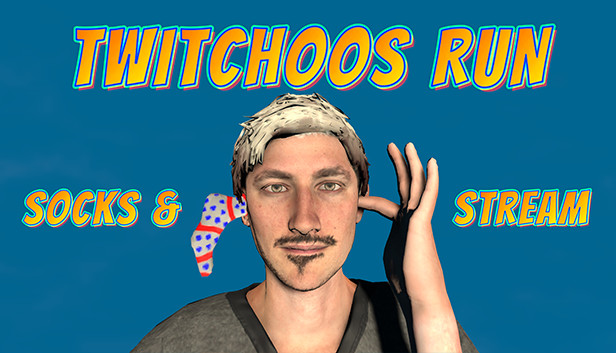
I’m always on the lookout for more ways to interact with Twitch viewers and so I decided to try this game out when the dev approached me for a review. I gave it a spin and concluded that is a great idea for a game, but ultimately it lacks content. There is one level. The different modes of play are basically the same. The game mechanics aren’t explained even though they are basic, there isn’t an option to custom the controls if you wanted. There is a bit of a hiccup when it comes to fully translating languages. I chose to play in English and some of the text still came up in French. There was quite a bit of game delay between chat input and my game play. There was a lot of standing around doing nothing. And finally, the way the character is designed to run is very stereotypical “effeminate gay man” run and feels like a jab at the LGBTQ+ Community.

If you want to play a quick, yet frustrating game with your live streaming viewers, feel free to go for this game. If this isn’t free to play, I would not recommend anyone buying it. A lot more work needs to go into this title.

Achievement Hunter’s Note: N/A
Achievement Acquisition Difficulty: N/A

Like the review? Come catch me live on Twitch, follow my Steam Curator page, or check out some clips.

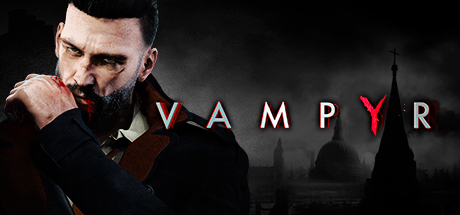
Vampyr

A historical fantasy game where decisions matter. Bite some rats, cure the plague, dole out justice as you see fit, but at what cost?

I’m not sure I’d consider this a horror game. It’s more action/adventure and story driven. I don’t have any real complaints about this game. The story was great, the animation was gorgeous, dark, and moody. The music is quite fitting and adds to the atmosphere of the game itself. [I loved the dramatic violin solos in battles.]

There are many involved and dynamic conversations you can have with other characters and once you make a choice, there is no going back. The saves are automatic and if you don’t like the outcome of the decision that was made, the only way to “undo” is by restarting the entire game. I found this frustrating at times, but it also made me take the game more seriously. I will say, this game does put you on the spot at sometimes, but the “no turning back” does enhance the replay ability of the game itself. There are multiple endings and a plethora of decisions to make.

The controls of the game weren’t too complex to master. Battle itself wasn’t overly difficult either. There are some times where the battle seemed a bit monotonous considering the limited move combos, but there are many types of weapons to test out and you can mix and match till you have just the right build for your playstyle. I will say, I do like the fact that you are able to respec your skills at any time throughout the game as it makes testing out different styles of combat easier to customize. The game can also be played in different difficulty modes if playing in hard mode steams your broccoli or if you want a relaxing romp through Spanish-flu infected London.

If you are going for achievements, this is a game where you will have to play it a bare minimum of two times, perhaps more. A good portion of the achievements are story centric, but a lot are also tied to the decisions you make and so you are going to miss out on some depending on what you pick. That’s just the way of it.

I had a lot of fun and would recommend the game. 9/10 Would bite again.

Achievement Hunter’s Note: There are a lot of achievements that are easily gotten by finishing the story, but there are also a few that will require a second or potentially a third play through so all the differing endings and collections can be completed.

Achievement Acquisition Difficulty: Medium +

Like the review? Come catch me live on Twitch or check out some clips.

Yomawari: Night Alone

A mildly spooky and atmospheric game that will have you searching for all sorts of clues in a creepy neighborhood to discover what happened to your missing sister and dog.

Considering I am a horror lightweight; yes, I screamed, jumped, and panicked more than once over the happenings in this game. The atmosphere is perfect for giving the player an unnerved feeling. If you want to try a horror game but you’re a bit of a chicken [like myself] this game shouldn’t be nightmare-inducing or keep you up at night, but it might give you a fright here and there.

The game controls took a little bit to get used to: I found myself more than once accidentally using the wrong item in an inappropriate moment because I forgot to switch this or that. There is no real combat, the game is more about avoidance.

For those of you going for completion, look everywhere for items, you will need to collect a lot. A guide may prove useful. Many of the collections item achievements rely on one another to be finished.

I am basically done with this game except for one hang up. The achievement that requires 50+hrs of gameplay is glitchy and may require a replay of the game or some specific trick to make it work. [Personally, I don’t have the patience or time for that. Forever 99%.]

This game was a fun but eerie experience. Would recommend to those who aren’t looking for a hard-core horror experience.

Achievement Hunter’s Note: Hoard salt. The Long Night achievement tends to glitch. This may keep you from 100%-ing the game as it did for me.

Achievement Acquisition Difficulty: Easy+

Like the review? Come catch me live on Twitch or check out some clips.

Spyro: Reignited Trilogy

“Why should I play Spyro?”
Aside from the fact you get to play as a small purple dragon who saves dragons, dragon eggs, and other realms; you can burn, trample, explode, race, jump, glide, and hop though three separate adventures. [I mean, who doesn’t want to be a dragon and torch things?]

The game play is relaxed and enjoyable and works with keyboard/mouse or controller. Combat is also just as easy to pick up and understand. Depending on player skill level, the bosses may be a bit of a challenge. This is a pleasant game for all ages.

The remastered versions for these classic games have amazingly stunning graphics that stay true to the art style. The music is just as wonderful as it was in the originals, and the gameplay is just as fun. I noticed it seemed like a lot more effort was poured into the first game making all the dragons you were saving unique and interesting to look at. Whereas the other games, the second lacked dragons entirely [major disappointment] and the third had you saving dragon eggs that would hatch upon retrieval [those animations were not that unique or as interesting to watch]. Needless to say, the first game was my favorite.  

My complaints:
BE WARNED there is a camera blur active when you start the game. I found myself feeling nauseous halfway through due to the motion sickness. There is an option to turn this blur off, but this is a known issue and has been corrected thusly. After turning off the camera effects, playing the game was once again no issue.

The only other thing that became rather annoying was in Ripto’s Rage there was an excessive amount of backtracking and returning to other levels that you couldn’t complete unless you unlocked certain moves you didn’t have access to until later on in the game. I personally found this to be tedious and an uncreative way to try and “lengthen” the game play. Honestly, it was more obnoxious than anything.

Achievements are reasonable and relatively easy to get. Pretty easy game to 100%.

Achievement Hunter’s Note: Most of the achievements aren’t difficult to get, save one or two.

Achievement Acquisition Difficulty: Easy+

Like the review? Come catch me live on Twitch or check out some clips.